


GEORGETOWN, Guyana – President Irfaan Ali is calling for faster digital visa systems and better regional transport links to make travel to and within the Caribbean easier, saying that cumbersome travel processes are holding back tourism, business and international partnerships.
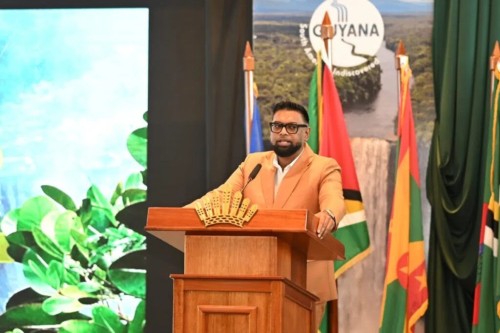 President Irfaan Ali speaking at the opening of the Caribbean Tourism Organisation’s State of the Tourism Industry Conference (SOTIC) on Wednesday. (Photo credit: DPI)Speaking at the opening of the Caribbean Tourism Organisation’s (CTO) State of the Tourism Industry Conference (SOTIC) on Wednesday, Ali said Caribbean travellers seeking European visas sometimes have to travel to countries such as Trinidad and Tobago or Suriname for appointments, delaying trips by days.
“The modern world can’t be that complicated. You can get the biometrics of anybody…in a couple of seconds,” he said.
Ali said such delays undermine efforts to build stronger international partnerships, particularly when Caribbean representatives are invited to conferences and other events overseas.
“You can’t build partnership and friendship like that,” he said.
The Guyanese president contrasted this with the Gulf states, where he said electronic visas and frequent air connections facilitate easier movement, and pointed to similar connectivity being developed across Latin America.
He said the Caribbean needs to adopt a more integrated approach to tourism, allowing visitors to move more easily between destinations and creating a shared regional tourism ecosystem rather than having countries develop their tourism products in isolation.
“The only thing that can take us forward by scale is integrated infrastructure, starting with an integrated transport system,” Ali said.
He said better connectivity would allow the region to package its diverse tourism offerings more effectively and encourage visitors to experience several Caribbean destinations during the same trip.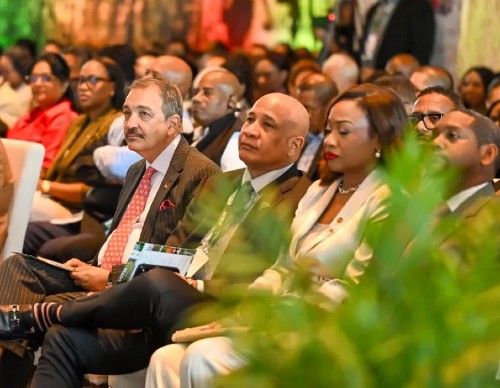 A section of the audience at the formal opening of SOTIC 26. (Photo credit: DPI)
Ali warned that the Caribbean could not continue relying on its natural beauty alone as other destinations invest heavily in transport, hospitality, entertainment, sporting events, digital tourism and other infrastructure.
“Our natural product and our natural beauty are important assets. But if we are complacent about the way we will reorganise, reorient, revalue, reposition this asset, we are not going to optimise its value in the future,” he said.
He urged Caribbean governments, investors and tourism businesses to “scale up” their thinking and investment, arguing that the region needs to plan for the future rather than continue operating in short cycles.
“We have to be futuristic. We gotta bite the bullet at some point,” he said. “We can no longer plan in cycles. You have to plan ahead of time, and we can only do so together.”
He also called for greater use of technology, including artificial intelligence and cybersecurity, arguing that Caribbean countries should work together because individual states are too small to tackle such areas alone.
Ali said regional cooperation should also extend to major international events. He suggested that Caribbean countries jointly identify a number of global events they want to attract by 2035 and develop the infrastructure needed to host them.
Ali also called for greater resilience in tourism investment, saying disaster preparedness and business continuity should be incorporated into projects from the outset.
He proposed that investment agreements include contingency provisions that would automatically take effect following natural disasters, while urging the region to reduce its dependence on single markets and supply chains.
Tourism businesses, he said, should source more food from local farmers and suppliers across the region.
The president said the Caribbean’s tourism industry demonstrated its resilience after the COVID-19 pandemic, but that resilience must now be reinforced through infrastructure, investment, partnerships and strategy.
“Tourism is always resilient. But we have to now add to that resilience by the infrastructure, the investment, the partnership, the strategy,” he said.
Ali also urged investors to develop new tourism experiences rather than relying solely on natural attractions.
“This is where our investors are too laid back….They’re satisfied with the product that nature has given them. But the future is going to be completely different,” he said.
Guyana is hosting SOTIC for the first time. The event runs until October 9 under the theme, “Tourism Futures: Smart, Sustainable and Inclusive”.

