


BRIDGETOWN, Barbados – The executive director of the Barbados-based Caribbean Export Development Agency (Caribbean Export), Dr. Damie Sinanan says he is pleased that the Caribbean Investment Forum (CIF) has grown into “a beast of its own” and that there has been “no shortage of great ideas in the Caribbean region”.
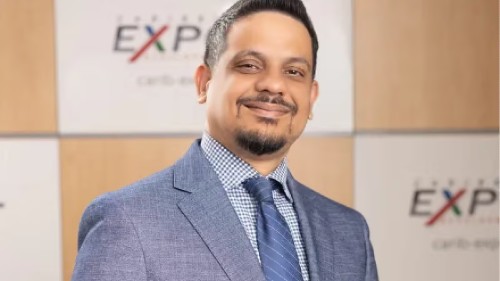 Executive director of the Barbados-based Caribbean Export Development Agency (Caribbean Export), Dr. Damie Sinanan. (Caribbean Export photo)But Sinanan believes that there is need for new initiatives to fund projects in the Caribbean, noting for example “we don’t really do a lot of equity investments in the Caribbean.
“We don’t have a lot of venture capital funds in the region. We don’t have that patient capital,” he told the Caribbean Media Corporation (CMC) adding that when good ideas are brought up “to bring them to fruition, you need patient capital, investors that will wait one and two years to see this process through and give different tracks to funding.
“We don’t have that available. We have to really diversify our funding sources in the region if we are to make a big dent going forward,” he added.
CIF 2026 was held earlier this month in Barbados and Caribbean Export said it successfully shifted the Caribbean’s narrative from a “talk shop” to an execution platform focused on capital deployment.
Caribbean Export said that the three-day event was able to align direct investor engagement with major regional priorities, including the Caribbean Community’s (CARICOM’s) goal to slash the six billion US dollar regional food import bill.
It said that the CIF 2026 was able to amplify Prime Minister Mia Amor Mottley’s keynote call to activate the estimated US$80 billion in regional commercial bank liquidity and savings to fuel indigenous Caribbean growth.
According to CIF the event advanced a curated pipeline of 30 pre-qualified, bankable projects valued at US172million,featuredalongsidealivestagepitchofUS39 million in immediate high-impact deals.
Sinanan told CMC that said the CIF has evolved from 2022 to what was just held only a couple of weeks ago in Barbados, and “our aim has always been to place investable projects in front of investors that attend.
“And in order to do that, we have to work very, very closely with project owners, giving them the technical assistance necessary so that they can build their project to make it investable in order to present it to an investor.
“We’ve been very good at doing that. We’ve partnered with the United Nations Industrial Development Organisation (UNIDO). We’ve partnered with other organisations that offer that technical assistance, and we have a project catalogue right now of over US$80 million, a project value of over 80 million US dollars of bankable investable projects.”
Sinanan said it really means that you’re putting something in front of an investor that makes sense to them.
“An investor, when he sees a project proposal, he wants to know if I put my money in, what are the next steps and when can I get my money out and how much can I get my money out? So it’s important to understand that’s how an investor thinks.
“So when you are packaging your project, if you’re a Caribbean project owner, you’re packaging your project, you have to make sure that you can answer all the questions that an investor wants to have. So, structure your project, structure your financials.
“It’s not just a business plan. Unfortunately, we put business plans out there and think that that’s an investable project. You have to have cash flow. You have to have realistic cash flow. You have to have risk assessment. You have to show an investor that you’ve taken all steps to make sure that their money is protected,” Sinanan told CMC, adding “and it’s not hard, it’s just we have to get used to doing it in the Caribbean region.”
He acknowledged that there are various problems in the region associated with putting plans together given that despite good concepts, and so on, the financial institutions will tell investors it lacks preparation, proper preparation and sometimes they have administrative deficiencies.
He admitted also that sometimes these projects require environmental assessments, feasibility studies that points to a circular problem in that you hear persons are unable to access, or they complain that they are unable to access the requisite financing for their project.
Sinanan also agrees that while none of the steps outlined comes free and as a result, an investor would need to have the resources to invest, to develop the project, and then from the project, now, hopefully, get that conversion into not just the investable resources, but the actual implementation of the project.
“Well, I think what you’ve identified is the solution right in there. You have to have facilities in the Caribbean region that allows to help project owners package and layer their projects” Sinanan said, adding “we have many project preparation facilities.
“We have to ensure that we have the resources and the patient capital in the Caribbean region that can work with a project owner to really make sure that their project is investable. So, like you said, grant funding to ensure that they can do pre-feasibility studies.
“I mean, Caribbean Export, we offer that. We have our grant funding that we would offer. You have to have the technical assistance in place that project owners can access at a very low cost that will allow them to really make sure that their project is packageable. So, we have to have this, I would like to call it an ecosystem in place that supports project packaging and project development. And we have it”
Asked whether it is working Sinanan replied “it’s in bits and pieces.We don’t have a cohesive strategy across the Caribbean region. We have it in certain financial, certain multilateral agencies, they offer it.
“Certain regional agencies, they offer it. But what I don’t see is bringing it all together. And we kind of view Caribbean Investment Forum and Caribbean Export as that bridge to bring all of these project packaging resources together so project owners can access it,” Sinanan said, noting that the problem is those project owners don’t know these resources exist.
“They are not aware of it because we have to do a better job of getting it out there,” he said, aware of the need to transcend to the next level despite the success of past CIFs.
Sinanan said what is really required is a cultural and knowledge shift amongst the region’s entrepreneurs.
“Scale is required, unfortunately. And we all know, like, if you have a project size for 10 million and you have a project size for 100 million, it’s the same due diligence that an investor has to do. It’s the same amount of work that an investor has to do. So, any investor will obviously go for a larger ticket size.”
The Caribbean Export official said that many investors in the early stages of CIF would note that they are interested, but the ticket size is too small and it’s just not worth their while.
“So we have to build that scale. And unfortunately, we’re many small islands, developing states, small populations, small projects. We have to encourage projects that can scale, that we can work together.
“So cross-island projects, regional projects that we can put together, package, lay and present to willing investors that are wanting to go. And then we get into the whole thing where you have to make sure that we have to have a policy environment that supports that kind of investment.”
Sinanan said that “another road” the region would need to travel upon reiterating that there is need to encourage cross-border, cross-fertilisation and projects that are of scale that we can present to investors, because they are looking for large ticket sizes.
“And we need to ensure that we have that scale if we are to attract major capital to the region. And just to add another point, we have to diversify our funding resources in the region, unfortunately, because we only have commercial banks, really,” Sinanan said.

