


PORT-AU-PRINCE, Haiti – The United Nations World Food Programme (WFP) Friday made an urgent appeal, calling for support to protect recent fragile gains in the fight against hunger and to foster stability in Haiti.
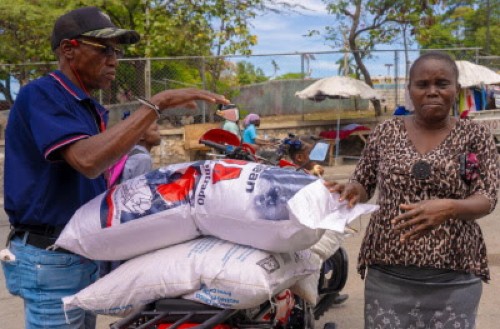 (WFP Photo)The WFP said that new data shows more than half of all Haitians continue to face acute food insecurity with an updated analysis from the Integrated Food Security Phase Classification (IPC) indicating that 5.8 million Haitians, an estimated 52 per cent of the population, are facing crisis levels or worse of food insecurity (IPC Phase 3 or above).
It said that of those, more than 1.8 million are enduring emergency food insecurity levels (IPC Phase 4) for the period of March to June 2026, meaning they are exhausting their last assets and unable to meet even basic food needs.
In 2025, despite a complex operating environment, WFP worked with the government and partners to assist 2.7 million people in Haiti through emergency food assistance, school meals, social protection programmes, and assistance to smallholder farmers, which has contributed to a slight improvement in food security compared to earlier projections for the same period.
However, WFP warns this modest hard-won progress could quickly be reversed. Rising fuel prices, driven by the conflict in the Middle East, are increasing transportation and food costs.
“These small improvements to food security numbers must not lead to complacency,” said Wanja Kaaria, WFP Haiti Country Director.
“Elevated fuel prices and the resulting rise in food costs risk rolling back these gains, pushing already vulnerable families deeper into crisis and further destabilising the situation.”
Amid national and international efforts to restore public security in the Caribbean nation, WFP is calling for equally robust measures and funding to provide emergency relief and invest in long-term solutions to address the food insecurity that affects more than one in two Haitians.
“Tackling hunger is vital to restoring stability in Haiti. We cannot build peace when families have nothing to feed their children. Hunger opens the door to armed groups who will exploit the crisis, luring children with food and preying on women and young mothers who are struggling to provide for their families.
“Food assistance is the first line of defense in empowering vulnerable populations and rebuilding local food systems that can foster hope for the future,” said Kaaria.
For almost a decade, Haiti has experienced an ever-deepening food security crisis. This has been driven by violence related to armed groups, political upheaval, economic crisis and high levels of vulnerability to extreme weather, as seen with Hurricane Melissa which struck the south in late 2025.
Conflict has displaced more than 1.4 million in Haiti, resulting in roughly 300,000 people living in overcrowded and unhygienic temporary shelters in the capital.
WFP said it requires US$332 million to maintain its crucial operations over the next 12 months and if enough funding is secured, plans to reach more than 2.7 million people with critical emergency and resilience building support.
Meanwhile, Stéphane Dujarric, the spokesman for the UN Secretary-General, Antonio Guterres, told the daily UN briefing that the UN Office for the Coordination of Humanitarian Affairs (OCHA) is reporting new displacement of Haitians following armed attacks earlier this week in the South- East department.
According to the International Organization for Migration (IOM), on April 13, violence in the municipality of Marigot displaced more than 1,300 people. Most of them are currently sheltering with host families.
“IOM notes that this is the first time that displacement of this scale, directly linked to armed attacks, has been recorded in the South-East department. This is an area that has previously served as a reception zone for people displaced by violence elsewhere in the country.
“More than 165,000 men, women and children are currently hosted privately across the department. OCHA is coordinating the humanitarian response where conditions allow, in close collaboration with authorities and partners,” Dujarric told reporters.
“However, ongoing insecurity and access constraints, combined with the scale of needs and limited funding, continue to affect the reach and pace of humanitarian assistance in affected areas,” he added.
Dujarric said that the US$880 million Humanitarian Response Plan for Haiti is just under 20 per cent funded, with only US$172 million received.

