


BRIDGETOWN, Barbados – The United Nations Resident Coordinator’s Office (RCO) for Barbados and the Eastern Caribbean, says it has successfully concluded a series of civil society organization (CSO) engagement workshops on citizen security, across four Eastern Caribbean countries.
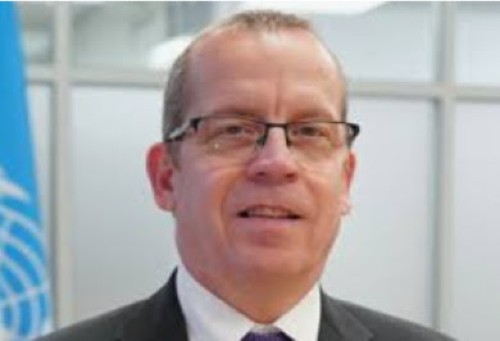 UN Resident Coordinator, Simon SpringettThe RCO said that the workshops reaffirmed its commitment to inclusive development, peacebuilding, and human rights. It said the sessions were coordinated in collaboration with national citizen security focal points, the UN Regional Peace and Development Officer and the Caribbean Policy & Development Centre (CPDC), brought together almost 100 CSO representatives across Antigua and Barbuda, St. Kitts and Nevis, Grenada, and St. Vincent and the Grenadines.
“Citizen security is not simply a policy priority. It is a fundamental human right and a cornerstone of sustainable development. Addressing it requires a whole-of-society approach, and civil society organizations are at the heart of this effort,” says UN Resident Coordinator, Simon Springett, reiterating civil society as an indispensable partner in addressing citizen security challenges through prevention, empowerment, and community-led solutions.
According to the RCO the participants were of the view that citizen security extends beyond law enforcement and must be addressed as a development challenge, one that directly affects social cohesion, trust in institutions, and progress toward the United Nations Sustainable Development Goals (SDGs).
In this regard, civil society representatives highlighted their unique role as trusted community actors, often serving as the first to identify emerging risks, support vulnerable groups, and advocate for inclusive and rights-based responses, it said.
In Antigua and Barbuda, CSOs strengthened their capacity in civic responsibility, human rights, violence prevention, and community engagement, while exploring how grassroots initiatives can align with national and regional security frameworks.
The St. Kitts and Nevis engagement brought together nearly 60 CSOs and community leaders, reinforcing a public health approach to crime and violence prevention focused on early intervention, data-driven decision-making, and community partnerships.
In Grenada, a one-day hybrid dialogue placed civil society at the center of discussions on youth violence, community resilience, human rights, and cultural interventions. Government and UN representatives recognised that CSOs bring trust, cultural understanding, lived experience, and innovation, and emphasized the importance of meaningful youth participation.
The engagement in St. Vincent and the Grenadines zeroed in on the rising impacts of crime, gender-based violence, and data gaps, while highlighting the importance of prevention, psychosocial support, restorative justice, and community trust-building.
During the session, the UN announced a Five-Year CSO Engagement Strategy (2026–2030) aimed at deepening collaboration and improving coordination across the Eastern Caribbean.
The RCO said that despite differing national contexts, CSOs across the four countries identified common priorities, including the need for strengthening data collection and evidence-based advocacy; expanding youth mentorship, skills training, and diversion programmes among other areas.
It said that building on the momentum of these engagements, the UN Resident Coordinator’s Office will seek to further advance implementation of its CSO Engagement Strategy (2026–2030) across the Eastern Caribbean.
“Continued efforts will also support improved coordination, information-sharing, and capacity-building among CSOs; strengthen policy dialogue and data-sharing to ensure community realities inform national strategies and continue promoting inclusive, prevention-focused approaches to citizen security aligned with the SDGs and international human rights commitments.”

