


BASSETERRE, St. Kitts – St. Lucia’s Prime Minister Phillip J Pierre Thursday said he believes both the United States and the Caribbean Community (CARICOM) grouping have a “clear understanding” as to the current status of their relationship following talks on Wednesday with US Secretary of State, Marco Rubio.
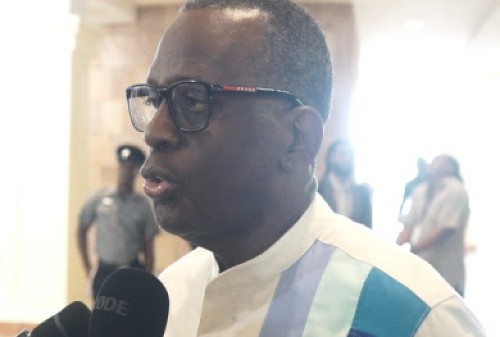 St. Lucia Prime Minister Phillip J Pierre (CMC Photo)Pierre, who along with his fellow CARICOM leaders met with Rubio during the 50th regular CARICCOM summit here, told the Caribbean Media Corporation (CMC) that he is certain that the “ meeting will only lead to the strengthening of relationships between the US and CARICOM”.
Pierre said on the issue of the United States urging Caribbean countries to lessen their dependency on the Cuban health programme, St. Lucia has enjoyed “a longstanding relationship with Cuba as far as medical professionals are concerned.
“Many of our students have studied in Cuba. So it’s a very, very important topic for us. The Americans told us their side of the story. We told them our side, and we are continuing in dialogue.
“As I said before on that topic, we understand where the Americans are coming from. But as a region, we have our issues which we have to deal with,” Pierre said, adding “I can tell you, the situation will be resolved in a very amicable manner”.
Earlier this month, Washington denied “recently” asking St. Lucia to stop sending its nationals to study medicine in Cuba, even as it doubled down on its claim that the Cuban health programme is “illegitimate”.
Pierre had earlier told the second World Congress on Racial and Ethnic Health Disparities meeting in St Lucia that Washington had made the request, saying ““I have a big problem. Many of our doctors got trained in Cuba, and now the great United States has said we can’t do that any longer”.
During the ceremonial opening of the CARICOM summit on Tuesday evening, Trinidad and Tobago Prime Minister Kamla Persad-Bissessar criticised the political situation in Cuba, calling for free and fair elections and democratic rule.
“We cannot support a dictatorship in Cuba or anywhere else. We will not support it. We support regular, free and fair, democratic elections in a multi party system.
“We are all citizens and have equality before the law,” she said, adding “we must have freedom of expression and association, and for us in Trinidad to Tobago, we must have capitalism”.
Pierre told CMC that every leader, every country has its own external affairs.
“We do not have unity. We never had as far as external affairs are concerned,” he said, using as an example the fact that four CARICOM member states – St. Lucia, St. Incent and the Grenadines, Haiti and Belize -. have diplomatic relationship with Taiwan while the others are supportive of China, which regards Taipei as a renegade province.
“But we still exist. So in terms of what is an individual prime minister’s opinion on anything, whereas external affairs are concerned, I reserve the right,” he added.
Pierre said on the question of CARICOM having a consensus on the Cuba situation, I don’t think CARICOM has ever had a consensus on any external affairs matter.
“I think both countries have reserved the right. Some countries have better relationships with other countries. But I don’t think CARICOM has ever had a unified position on that. What I’m hoping for is that CARICOM does not get fractured on any issue.
“But I have no control over any other government. We are all independent countries and we take our own path, and I said my path, as far as being the Prime Minister of St. Lucia is concerned, is making life better for the people of St. Lucia and by extension the people of the OECS and CARICOM.
Pierre, along with his CARICOM colleagues have travelled to Nevis for their one day caucus, told CMC that his own expectations for a successful summit outcome, have always been rooted in these gatherings providing tangible benefits to St. Lucians and the wider Caribbean community.
“And that’s my only mission here, is to improve the quality of life of the people of St. Lucia. We are small countries. St. Lucia is a small country. We understand that our influence is minimal.
“What I can control is I can say to my people that they must try to be self-reliant, that they must try to eat what they grow and grow what they eat, that they must understand that we have serious issues as far as climate change is concerned and what they can do for themselves, they have to do it.
“In St. Lucia, we are very strong now on agricultural transformation…it’s no use that we as a country just sit and complain and cry about things we can’t change. What we can change, we have to try our best to change it. We have to change our lifestyles.”

