


ROSEAU, Dominica – Dominica says it participation in the Caribbean Digital Transformation Project is aimed at creating the enabling environment to encourage growth, development and digital transformation, calling also for developing countries to be involved in the greater adoption of emerging technologies, including advancements in telecommunications.
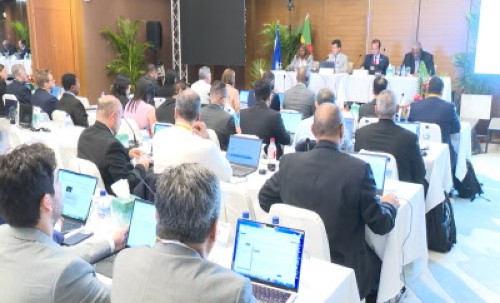 Delegates attending the 47th meeting of the Permanent Consultative Committees of the Inter-American Telecommunication Commission (CITEL) which ends here on Thursday (CMC Photo)Addressing the 47th meeting of the Permanent Consultative Committees of the Inter-American Telecommunication Commission (CITEL), Minister of State with Responsibility for Telecommunications and Broadcasting, Shakira Lockhart-Hippolyte, said Dominica is continuing to strengthen its digital and communications infrastructure, sharing in the goals of disaster preparedness and resilience, in keeping with the country’s vision of being the first climate-resilient country in the world and “recognising that all technologies are important to build a scalable and responsive disaster communication strategy.
“We, of course, also have goals that are more specific to our small island country. Creating the enabling environment to encourage growth, development and digital transformation by participating in the Caribbean Digital Transformation Project (CARDTP)…ensuring that we can detect and respond to threats to all forms, including weather-related,” she said.
The St. Lucia-based Organisation of Eastern Caribbean States (OECS) Commission has signed on as the implementing agency for the regional components of the World Bank IDA Grant funded CARDTP.
The development objective of the project is to increase access to digital services, technologies and skills by governments, businesses and individuals in the participating Eastern Caribbean countries.
The project is expected to contribute to increased digital connectivity, digital public services and the creation of technology-enabled businesses and jobs across the participating countries, namely Dominica, Grenada, St. Lucia and St. Vincent and the Grenadines.
Lockhart-Hippolyte said Dominica is also ensuring that the necessary legal framework is enacted to protect the citizens in the digital space ”and that international cooperation and coordination is readily available, allowing us to engage in information sharing and security enhancement practises with our partner nations.
“That is why we are actively exploring the implementation of Cyber Security Incidents Response Team,” Lockhart-Hippolyte said, encouraging greater adoption of emerging technologies, including advancements in telecommunications, including 5G deployment, Leos, B2B, Wi-Fi 8.
“We want to ensure that we create the environment to be early adopters and the testbed for new and innovative technologies. These are ambitious goals that require our steadfast continued engagement with other regulators to both learn and influence to ensure that our needs are met and our views considered.
“As we begin this meeting, we encourage all participants to engage in open, constructive and forward-looking discussions (3:34) that will strengthen our collective capacity and advance our common goals,” Lockhat-Hippolyte told delegates attending the meeting that ends here on Thursday.
The meeting here has brought together delegates from 42 countries and serves as a critical platform for collaboration among member states as they work to develop unified regional proposals ahead of the World Radiocommunication Conference scheduled for 2027.
The organisers say discussions will focus on a range of emerging and complex issues, including satellite-to-mobile connectivity, lunar communications, and the regulation of low-Earth-orbit satellite systems to ensure compliance with international standards.
They said that the outcomes of the discussions will help shape policies that support improved connectivity, innovation, and inclusive growth across the region.
The Inter-American Telecommunication Commission is an entity of the Organization of American States (OAS) with its objectives include facilitating and promoting, by all means available to it, the continuing development of telecommunications/information and communication technologies (ICT) in the Hemisphere, in pursuance of sustainable development.
It is also to promote and foster the existence of appropriate telecommunications/ICT that contribute to the integral development process in the region, with particular attention to underserved areas.

