

Haitian Student Dies By Suicide After Losing Protected Status and Being Fitted With Ankle Monitor
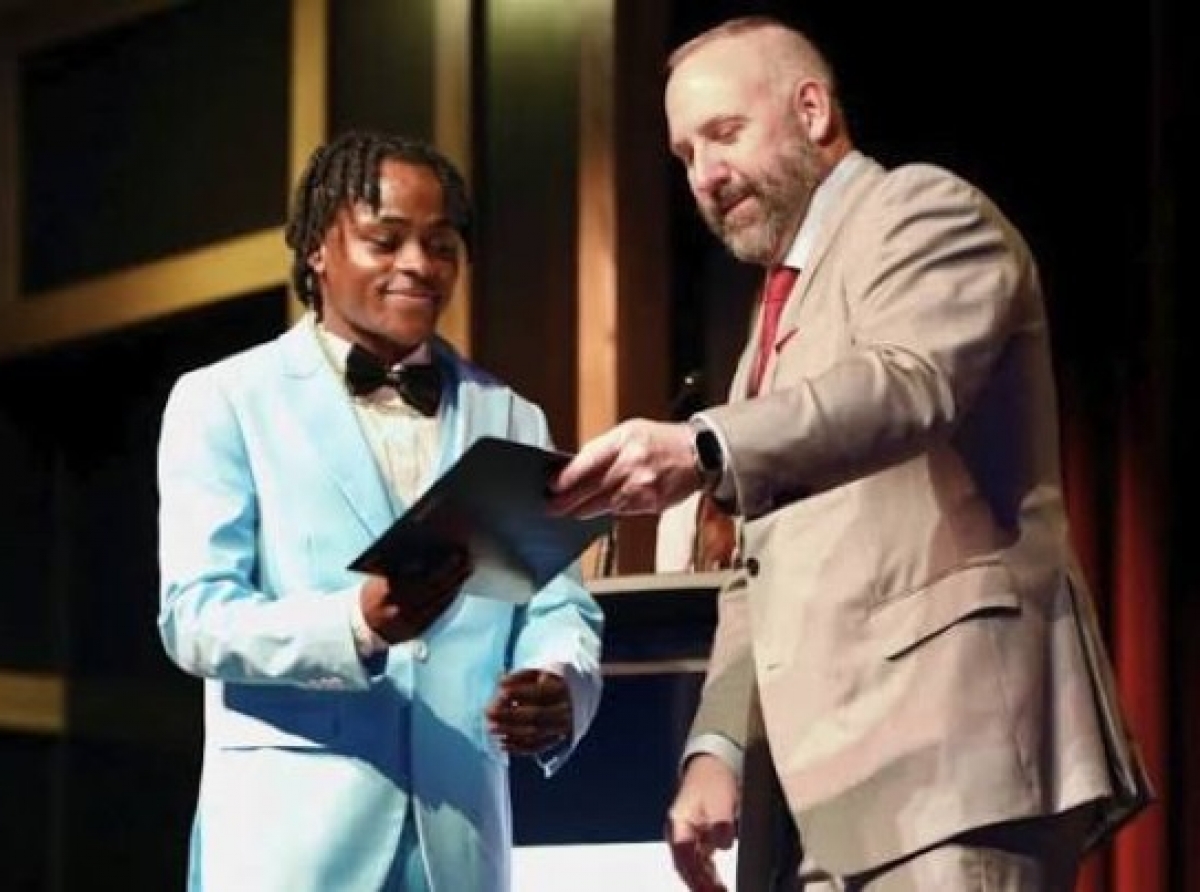
A 20-year-old Haitian college student in Ohio has died in an apparent suicide weeks after U.S. immigration authorities fitted him with a GPS ankle monitor, a measure his family says left the young man feeling humiliated and fearful about his future in the United States.
Pierre Damas Bel died last Monday after being struck by a tractor-trailer on Interstate 70 near Springfield, Ohio. According to the Ohio State Highway Patrol, Bel had parked his Toyota on the shoulder of the highway before exiting the vehicle and entering the westbound lanes.
He was pronounced dead at the scene and authorities said the circumstances surrounding his death remain under investigation.
Bel's death comes amid heightened uncertainty for thousands of Haitian migrants in the United States following the Trump administration's termination of Temporary Protected Status, or TPS, for Haiti.
Bel arrived in the United States in 2024 to reunite with his parents, who had left Haiti several years earlier. He subsequently received TPS, which allowed him to legally live and work in the United States while the designation remained in effect.
Following the end of those protections, however, Bel was among Haitian migrants placed under electronic monitoring by U.S. Immigration and Customs Enforcement while their immigration proceedings continued.
ICE confirmed that Bel was fitted with a GPS ankle monitor on July 29.
His family says the device had a profound impact on him.
"After my son was outfitted with the ankle monitor, he felt like he was treated like an animal," his father, Pierres Ronal Bel, said in a statement that was shared publicly following his son's death.
Bel reportedly traveled twice to immigration offices in an effort to have the device removed.
His father said the 20-year-old was particularly embarrassed about wearing the monitor around other students and worried about how it would affect his ability to play soccer, a sport he had played throughout high school.
Bel himself publicly described the experience shortly after receiving the device.
In a July 30 social media post, he said he had come to the United States to pursue an education rather than commit a crime or harm anyone. He said wearing the GPS monitor had left him with feelings of "shame and humiliation."
A promising student
Those who knew Bel have described a young man who appeared to be building a promising future in the United States.
He graduated with honors from Springfield High School in May, played varsity soccer and participated in the school's Junior Reserve Officers' Training Corps, where he attained the rank of lieutenant.
Bel had recently begun studying neuroscience at Wright State University and hoped eventually to pursue a career in medicine.
Letters written in support of his immigration case described him as hardworking and ambitious.
One of his former JROTC instructors wrote that Bel had accomplished a great deal despite having to adapt to an unfamiliar country and described him as someone whose character would make a positive contribution to American society.
But according to his family, the uncertainty surrounding his immigration status and the ankle monitor increasingly weighed on him.
Bel's father said his son was subjected to ridicule over the monitoring device and had become distressed after believing it was interfering with his participation in activities at college.
On the morning of his death, Bel contacted his father by video call.
"He called me at 8:03 on a video call, and he said, 'Dad, I'm not feeling OK. I'm not thinking right,'" his father recalled.
His father told him to come home so they could talk.
Several hours later, police arrived at the family's home to inform them that Bel had died.
Family points to immigration crackdown
Bel's family and immigrant advocacy organizations have linked his deteriorating emotional state to the government's immigration policies and the decision to place him under electronic monitoring.
Guerline Jozef, executive director of the Haitian Bridge Alliance, said Bel had been afraid of being deported to Haiti and described his death as a devastating consequence of the uncertainty facing Haitian migrants.
Community members have since held vigils in his memory and called for an end to the use of ankle monitors on Haitian migrants.
At a gathering outside Columbus City Hall, friends and former coworkers remembered Bel as an ambitious young man who loved soccer and hoped to become a doctor.
His death has also renewed criticism of the federal government's use of electronic monitoring as an alternative to immigration detention.
ICE, however, has rejected suggestions that the agency is responsible for Bel's death.
The agency said Bel was placed under GPS monitoring while his immigration proceedings continued and argued that migrants who do not want to remain in the United States under those conditions have the option of voluntarily leaving the country.
Homeland Security Secretary Markwayne Mullin also rejected criticism of the department, saying during a visit to Ohio that officials had followed established procedures.
"It breaks my heart for the parents," Mullin said, while maintaining that DHS was "not responsible" for what happened.
Uncertain future for Haitian migrants
Bel's death comes at a particularly difficult time for the Haitian community in Springfield, which has become one of the focal points of the national debate over immigration.
More than 300,000 Haitians lost TPS protections this summer after the Supreme Court cleared the way for the Trump administration to terminate the designation.
The administration has argued that TPS is intended to be temporary and has moved ahead with deportations to Haiti.
Immigrant advocates have strongly opposed those removals, pointing to continuing gang violence, kidnappings, killings and political instability in Haiti.
For Bel's family, however, the wider immigration debate has now become a deeply personal tragedy.

