


Jamaica's INDECOM Head Calls For Overhaul of Police Body Camera Deployment
KINGSTON, Jamaica — The head of Jamaica’s independent police oversight agency is calling for a major overhaul in how body-worn cameras are deployed across the Jamaica Constabulary Force (JCF), arguing that the current system fails to prioritise the operations where accountability and transparency are most critical.
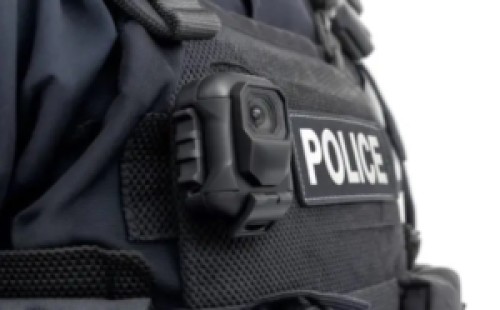 Speaking at a policy round table hosted by Jamaicans For Justice (JFJ) at The Courtleigh Hotel & Suites in New Kingston late last week, Independent Commission of Investigations (INDECOM) Commissioner Hugh Faulkner said the majority of the JCF’s body-worn cameras are currently assigned to officers within the Public Safety and Traffic Enforcement Branch, whose duties are largely concentrated in commercial districts.
“Indecom is of the considered view that this deployment pattern is fundamentally incongruent with the operational and legal imperative facing the JCF and, by extension, Jamaica, particularly given the current high and deeply concerning incidents of police-involved fatalities,” Faulkner said.
He argued that priority should instead be given to officers participating in planned operations, particularly tactical teams engaged in high-risk confrontations with armed suspects. According to Faulkner, such deployment would strengthen transparency and accountability in fatal police shootings, especially in incidents where there are no independent witnesses.
Faulkner acknowledged the difficult and often dangerous environment in which Jamaican police officers operate, noting that law enforcement personnel frequently confront armed gangs, organised criminal networks, extortion rings, and escalating firearm violence.
“From time-to-time, [officers] encounter armed gangs, organised criminal networks, contract killings, extortion, and escalating firearm violence,” he stated, adding that officers often enter volatile situations uncertain whether they will safely return home to their families.
However, he maintained that accountability remains essential in any democratic society.
“No democratic society can ignore the equally important reality that the State’s coercive powers must always be exercised transparently, lawfully, proportionately, and subject to objective review,” Faulkner stressed.
The Indecom commissioner said the police high command recently disclosed that approximately 1,500 body-worn cameras are deployed daily across the force, signalling recognition by both the Government and the JCF that modern policing requires technological support.
But Faulkner questioned whether the cameras are being used where evidentiary and accountability needs are greatest.
“Our perspective is data-driven, particularly those officers who are part of tactical teams, those issues where search warrants are involved, high-risk apprehensions, and targeted raids for firearms,” he explained.
He noted that such operations are carefully planned and involve intelligence gathering, operational coordination, and a foreseeable likelihood of force being used.
“The operations involve foreseeable contact between armed State agents and civilians who may also be alleged to be armed and are believed by the police to likely challenge their instructions,” he said.
Faulkner contrasted these operations with patrols in commercial districts, which are typically crowded with civilians and often monitored by CCTV systems and JamaicaEye infrastructure.
“In such environments, multiple independent sources of evidence are likely in the event of an incident,” he said. “The same cannot be said of the environment in which the majority of fatal police operations take place.”
According to Faulkner, many questionable police shootings occur in remote communities, private homes, or isolated locations where there are no civilian witnesses or surveillance systems.
“It is precisely in these settings that are known to be devoid of CCTV, JamaicaEye, or independent eyewitnesses that body-worn cameras are not merely desirable but imperative,” he argued.
Faulkner also highlighted concerns regarding the actual use of the cameras during police encounters.
Between January and April this year, he said, five shooting incidents involved officers who had been issued body-worn cameras. The incidents included one fatal shooting, two shooting injuries, and two firearm discharge incidents. However, no footage was captured in any of the cases.
According to Faulkner, officers provided several explanations for the absence of recordings, including not having a clip to attach the camera to a uniform, failing to activate the device, not having enough time to switch it from buffer mode to record mode, and being instructed by another officer to activate it — despite no footage ultimately being produced.
Despite more than 300 civilians reportedly being shot and killed by police in 2025, along with numerous others injured, Faulkner said there is no indication that body-worn cameras were deployed in any of those incidents, whether during planned operations or spontaneous confrontations.
He further disclosed that in 2024 body-worn cameras were deployed in five spontaneous shooting injury cases and one planned operation that resulted in a fatality. Footage was only available in one of those incidents.
With public scrutiny intensifying around police accountability, Faulkner emphasised the importance of objective evidence in investigations.
“Objective evidence matters,” he declared. “Context and sequence in events, in the investigation process matter, and video is a part of the solution.”
He added that body-worn cameras do not need to capture every angle perfectly in order to provide valuable evidence and enhance public confidence in policing.

