


Guyana's Vice President Urges Commonwealth Countries to Rethink Climate Finance and Urban Development
KIGALI, Rwanda – Vice President Bharrat Jagdeo on Saturday urged Commonwealth countries to make the most of new opportunities to access climate finance and advance development.
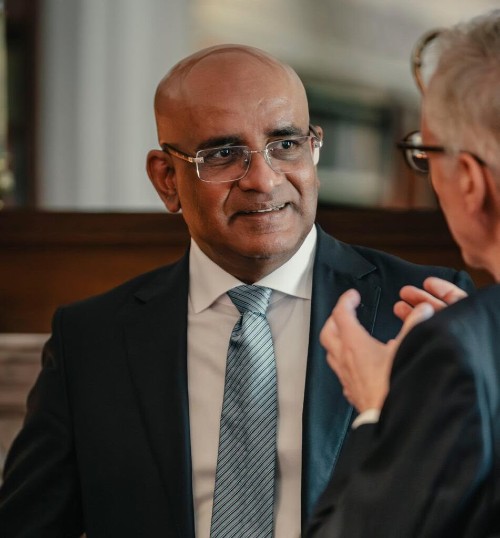 Guyana Vice President Bharrat Jagdeo.He joined a Commonwealth roundtable on the Declaration on Sustainable Urbanisation, adopted in Kigali in 2022. The roundtable, supported by The King’s Foundation, brought together member states, along with experts and civil society organisations, to address how to manage rapid urbanisation while improving quality of life, strengthening economic opportunity, and building resilience.
Commonwealth leaders have spoken repeatedly of its role as a platform for practical cooperation. One example is the Commonwealth Climate Finance Access Hub, developed from work Jagdeo chaired and presented at the 2014 CHOGM in Colombo.
Now headquartered in Mauritius, the hub has mobilised nearly US$500 million in climate finance, supported more than 100 projects, and deployed expert advisers across over 15 countries.
“The progress of the Commonwealth Climate Finance Access Hub is welcome and important. It shows what can be achieved when countries are given practical support to turn home-grown ideas into investable projects,” Jagdeo said.
“But the scale of today’s climate and development challenges requires far more. Helping all our people to secure better lives now requires managing complexity at a speed and scale not seen before. We need new thinking, new tools, and a step change in how the international community supports developing countries and smaller states.”
Jagdeo noted that discussions at the roundtable also focused on building cities that are liveable, productive and investment-ready, adding that similar challenges extend across broader development efforts.
Referencing a recent artificial intelligence summit in New Delhi, he said emerging technologies are already improving planning and decision-making globally, but cautioned that benefits must be inclusive.
“If AI models are not trained on data from small and developing countries, it will not work for them,” he said, urging greater investment in both traditional and AI-driven solutions that support small countries and the developing world.
He added that the Commonwealth, which represents roughly one-third of the world’s population, is well-positioned to play a leading role in advancing inclusive development solutions.

