


Guyana's Government Invites Proposals For Hydropower Project
GEORGETOWN, Guyana – The government is advancing the much-anticipated Amaila Falls Hydropower Project, setting an April deadline for proposal submissions from prospective firms or consortia under a revised Build-Own-Operate-Transfer (BOOT) model.
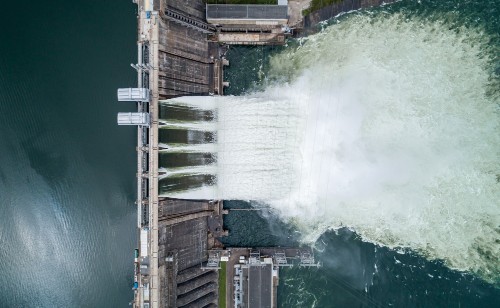 The project is designed to deliver a minimum of 165 megawatts (mw) of renewable energy to the national grid. It forms part of a broader energy mix strategy pursued by the People’s Progressive Party/Civic (PPP/C) Administration.
Under the revised framework, the hydro facility, to the south of here, will be executed through a Special Purpose Company.
The transmission network will be developed separately.
The government has also indicated that independent supervision will oversee the design and construction phases.
According to the Office of the Prime Minister, proposals will be evaluated based on the lowest power purchase agreement (PPA) price, overall project cost, completion timelines, and the bidder’s ability to secure financing.
Only firms or consortia with demonstrated experience in large-scale hydropower development will be considered. These include experience with building at least three large hydro projects, each at least 100 mw in the last 15 years.
Interested parties have until April 9 to submit their requests to the Chairman of the National Procurement and Tender Administration Board (NPTAB).
The administration has made it clear that the hydropower facility will form a central pillar of Guyana’s long-term energy strategy, complementing the gas-to-energy project in Wales and the numerous solar power projects nationwide.
The Amaila Falls project was first proposed more than a decade ago, under a previous PPP/C government, but faced delays due to the lack of support in the National Assembly in 2013.
When completed, the facility is expected to deliver reliable, large-scale renewable energy to the national grid and support Guyana’s low-carbon development goals as set out in the Low Carbon Development Strategy (LCDS) 2030.

