


ECLAC Warns Caribbean is At a Developmental Crossroads
PORT OF SPAIN, Trinidad - The executive secretary of the Economic Commission for Latin America and the Caribbean (ECLAC), Jose Manuel Salazar-Xirinachs, Monday said that the Caribbean is at a developmental crossroads and that the decisions made and strategies employed will determine whether the subregion escapes the middle-income trap that has bedevilled many economies.
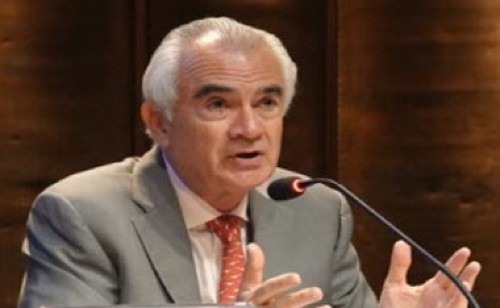 Executive secretary of the Economic Commission for Latin America and the Caribbean (ECLAC), Jose Manuel Salazar-XirinachsAddressing the 22nd meeting of the Monitoring Committee of the Caribbean Development and Cooperation Committee (CDCC), Salazar-Xirinachs, noted that this year’s theme focuses on how the Caribbean can unlock its development potential by enhancing growth and development through South-South Cooperation.
“This is as challenging as it is timely,” he said, noting that with just five years to 2030, the United Nations Sustainable Development Goals(SDG) are far off track, with only 17 per cent of targets expected to be met and another one-third either stalling or regressing.
“In fact, the Caribbean is one of the regions that is regressing in key areas such as education, inequality and climate change and natural resources,” the ECLAC official said, noting that added to this, the international environment is could not be more challenging.
“This has been an extraordinary turning point for the world economy, for geoeconomics and geopolitics. This is not globalisation as we knew it. This is a change to a new world of unilateral measures by some of the major powers, a new kind of interaction quite appropriately described by the term “instrumentalized interdependence”, the title of the cover of the recent issue of the Journal Foreign Affairs. “
Salazar-Xirinachs told delegates that a rules-based world trade and investment system is to the benefit of all the economies, large and small, but in particular it is essential for the small economies that do not have the power and can have much to loose in a world of raw power and unilateral actions.
“But this seems to be the new reality, and it is a major change from the kind of world order of the last 80 years. So we have to rethink the challenges of growth and development in light of this new reality to manage global interdependence.
“As we have been saying in ECLAC, and as indeed has been saying the Secretary General of the UN, (Antonio Guterres) countries should continue to strive for a solid multilateral systems, based on rules, and solid multilateral institutions that help countries coordinate and collaborate on the many development, environmental, security, peace and other challenges facing the world today.”
Salazar-Xirinachs said that the Caribbean continues to battle several headwinds that keep pushing it from its desired growth path and aspirations.
He said weak productivity growth, combined with limited innovation and technological upgrading, has kept economic growth below its potential for a long time.
“The reality is that growth in the Caribbean has been constrained by insufficient investment in research and development, frontier technologies and modern institutions. This has been aggravated by the mismatch between the skills and competencies required for a modern workforce and the training offered in universities and technical learning institutions.”
Salazar-Xirinachs said weak growth, combined with high public debt and debt servicing costs, limits the subregion’s development prospects.
He said while public debt has declined since the COVID-19 pandemic, it remains uncomfortably high.
“The Caribbean countries maintain on average debt to GDP ratios which are 20 points higher that the average for Latin American countries,” Salazar-Xirinachs said, noting that this leads to a situation in which debt servicing costs, average 30 per cent of government revenue, a situation that limits the ability of governments to invest in growth-propelling infrastructure, social policies, and resilience, and to strengthen public administration and institutions to improve state capacity and effectiveness.
“At ECLAC we have called this predicament “development distress” as opposed to the usual term of “debt distress”.
Salazar-Xirinachs said given its small size, the Caribbean must leverage the support of partners in the South to make the case for increased access to concessional financing for highly indebted, vulnerable middle-income small island developing states (SIDS), and for the scaling up of climate finance for SIDS, which have contributed little to the climate crisis but are most affected by it.
“And, as I said, it is also important to work together with all countries, in the Global South and also North, for improved rules-based trade arrangements. It is also crucial to diversify trade partners and economic partnerships,” Salazar-Xirinachs said, adding “so all these challenges make it more urgent for the Caribbean to leverage South-South cooperation to boost long-term growth.”.
He said the region must improve its strategies for attracting appropriate foreign direct investments (FDI) from the global South to modernise its traditional sectors, including agriculture, tourism, and niche manufacturing.
“But more than this, the Caribbean must do this by having a clear vision of what are its assets and develop clear strategies to leverage these assets to seize the opportunities of the new redefined globalisation. This is the core, in our view, to unlock development potential.”
He said this includes actively seeking out investment in the growth poles of the future and these include renewable energy and Greentech, telemedicine and digital health services, AI-enabled solutions across the economy and society, including in disaster risk reduction, education and learning and design systems, Fintech and E-commerce, among other areas. And of course one of the great assets of the Caribbean is the the ocean, the blue economy.
Salazar-Xirinachs said nevertheless, doing this and moving up the value chains would require both qualitative and quantitative changes in investment and in productive development strategies.
He said there must be a strong focus on value addition in traditional industries, as exemplified by the Dominican Republic, which has developed world-class niches in medical device assembly and pharmaceuticals and St. Lucia, which has innovated in producing biofertilizer from sargassum.
“At ECLAC, we have championed productive development policies aimed at transitioning our economies from the low capacity to grow trap to sustained high growth by boosting productivity and driving structural change. These policies are key to reduce Caribbean SIDS vulnerabilities from external shocks by creating more stable demand for their exports and build resilience. “
Salazar-Xirinachs said further, ECLAC has used its convening power to help frame debates on financing for development, digital transformation, and data for development, among other areas.
“This is critical for centering the particular concerns of Caribbean SIDS in global processes,” he said.
During his address, the ECLAC officials said climate change poses an existential threat to the Caribbean and aggravates the growth and debt challenges.
He described the subregion as the second most disaster-prone region in the world, after Asia and that the hurricane season in the Caribbean has become more active in recent years, with storms intensifying more rapidly, partly due to warmer sea surface temperatures driven by climate change.
He said that this is reflected in the 224 per cent impact on Dominica’s gross domestic product (GDP) in 2017 from Hurricane Maria, and in the significant effects in Jamaica from Hurricane Melissa over a month ago.
Salazar-Xirinachs said that the subregion has acknowledged the climate threat and that strong measures have been taken to reduce disaster risk and build resilience. He said the Barbados-based Caribbean Disaster Emergency Management Agency’s (CDEMA) comprehensive and integrated approach to disaster management has facilitated risk reduction in the region.
He said in addition, countries such as Grenada, Barbados, and The Bahamas have included hurricane clauses in their debt contracts to allow temporary suspensions of debt payments to aid recovery and reconstruction. Indeed, Grenada was the first country to benefit from a debt pause clause after Hurricane Beryl in 2024, which led to the suspension of US$12 million in interest payments.
Salazar-Xirinachs said he is inviting other countries in the subregion to adopt these clauses. South-South cooperation is essential for sharing lessons and best practices on climate adaptation and mitigation strategies that have worked well in other regions.
“The Brazil-Caribbean Water Management Partnership, for instance, has helped countries such as Barbados and Dominica in upgrading water harvesting, groundwater conservation, and dealing with droughts and water scarcity.”
Salazar-Xirinachs said another key topic is digital transformation, and now the enormous potential, but also challenges of AI.
He said digital transformation and AI can be major drivers of development, describing them as “a critical process that entails integrating and mainstreaming digital and AI tools and processes into business operations, household activities, and government operations.
“More than just technology and methods, it involves fundamental shifts in organisational culture and outlook,” he said, adding that digital transformation and AI offers Caribbean SIDS
“It is essential to help the Caribbean move up the value chain, thereby reducing reliance on basic tourism and crude commodities. Digital-enabled activities can help promote economic diversification and scale up key activities,” Salazar-Xirinachs added.

