


PORT OF SPAN, Trinidad – The Trinidad and Tobago government Tuesday said it is prepared to absorb the multi-million-dollar debt as a result of its deliberate decision to provide a fuel subsidy to consumers amid an increase in the international price for the commodity.
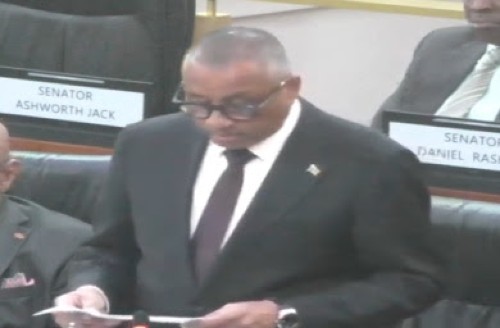 Planning, Economic Affairs and Development Minister Dr. Kennedy Swaratsingh“ Based on current estimates, this policy is expected to result in an additional subsidy requirement of approximately TT$318 million for fiscal 2026. But this government is prepared to carry that cost because we understand that increase in fuel prices would have a direct and immediate impact on transportation, food prices, and overall cost of living,” Planning, Economic Affairs and Development Minister Dr. Kennedy Swaratsingh told the Senate.
The Minister in the Ministry of Finance, told legislators that the world is now facing serious geopolitical uncertainty and that international oil and fuel markets remain volatile.
“Across the world, countries are experiencing rising energy prices and import costs and increased pressures at the pump. In Trinidad and Tobago, this government has kept the price of fuel steady. We have done so even though the cost of importing refined fuel has increased,” Swaratsingh said as he responded to a question from Independent Senator Dr. Marlene Attzs who sought to know what is the estimated fiscal impact of the decision to reduce to reduce the price of super gasolene by one dollar per litre.
She also sought to know whether the rising global fuel prices have affected government’s expenditure and deficit.
While he told legislators that the Minister of Finance Davendranath Tancoo, is in the process of preparing the annual budget for presentation next month where he will review the government’s decision. Swaratsingh said even though Trinidad and Tobago is more exposed to international markets, the subsidy would maintain.
He said the closure of the state-owned oil refinery Petrotrin by the previous administration eliminated domestic refining capacity, “thereby reducing economic resilience and flexibility as a country.
“So today, when international fuel prices rise, Trinidad and Tobago feels it more directly. But despite this unfortunate inheritance from the previous administration, this government has not passed that burden on to the people.
“We have chosen to absorb that pressure because we understand that households are already under strain. Let us be clear, maintaining the reduced price of super gasoline does carry a cost to the state.”
Swaratsingh said that the easiest thing to do would have been to pass this increase directly on to the people, adding “that is the easy route."
“We have made a deliberate decision to shield citizens from those increases and to keep fuel prices stable, even when it requires support from the state,” Swaratsingh said, adding “let me say this clearly…we will not allow international price volatility to automatically translate into hardships for the people of Trinidad and Tobago”.
GThe junior finance minister said that rising global fuel prices has increased the government’s subsidy liability and that from October 2025 to present, the estimated subsidy liability for fiscal year 2026 has increased due to movement in international oil prices.
“However, the actual impact on expenditure will depend on the payments made during the fiscal year, and these payments will continue to be managed carefully based on available fiscal space.”
Swaratsingh said that the fiscal impact of the additional subsidy cannot be viewed in isolation.
“While higher oil prices may increase subsidy costs, they will also result in increased energy revenue, which will partially mitigate the increased subsidy bill.”
He said that the overall impact will be reported at the end of this fiscal year, telling the Senate “we are not pretending that there is no cost.
“There is a cost. But there is also a cost to doing nothing. There is a cost when families cannot afford transportation. There is a cost when small businesses face higher input prices. There is a cost when higher fuel prices feed into inflation and make groceries and basic goods more expensive.
“This government understands that. That is why we reduced the price of super gasoline. That is why we have kept fuel prices steady despite rising international pressure and that is why we will continue to carefully and responsibly manage this issue,” Swaratsingh added.

