


BELMOPAN, Belize - The Belize-based Caribbean Regional Fisheries Mechanism (CRFM) says it has entered into a partnership with the Food and Agriculture Organization of the United Nations (FAO), and the Development Bank of Latin America and the Caribbean (CAF) ,in launching an open-access, Caribbean Blue Economy (NE) Knowledge Hub.
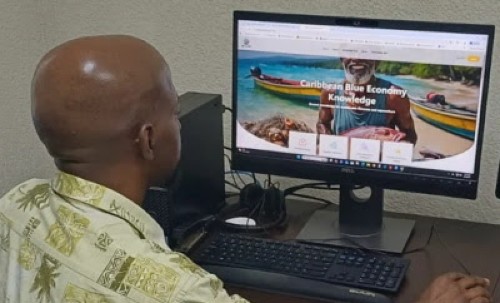 It said that the hub brings together decades of the region’s expertise and insight on fisheries, aquaculture, and marine spatial planning. It is also a permanent, multilingual home for Blue Economy data, best practices, policy tools, and technical insight from across the participating countries, namely Barbados, Belize, Guyana, Jamaica, Panama, and St. Lucia, built on CRFM’s expertise and the knowledge generated through the BE-CLME+ Project.
The CRFM said that the digital platform is a crucial outcome of the Global Environment Facility (GEF)-funded, BE-CLME+: Promoting National Blue Economy Priorities Through Marine Spatial Planning in the Caribbean Large Marine Ecosystem Plus project.
“The BE-CLME+ Knowledge Management Hub represents the continued drive of the CRFM to make knowledge products more accessible to all stakeholders; connecting policymakers, practitioners, researchers, and communities to the evidence they need to act, adapt, and lead,” said CRFM executive director, Dr. Marc Williams.
“Small-scale fishers, women who process and trade the catch, youth deciding whether this industry has a future worth joining, and Indigenous communities whose stewardship of marine ecosystems spans generations — all will find, in this platform, a resource calibrated to their realities.
“That means accessible formats, multilingual content, and practical tools that translate regional expertise into actionable guidance for every practitioner in the value chain, including fisherfolk, academics, and policymakers alike,” he added.
Powered by insights produced through the BE-CLME+ Project and CRFM, the hub organises technical reports, policy briefs, fact sheets, and multimedia resources across seven thematic areas for easy discovery. Users can search, filter by theme, and access an AI-powered assistant — “Ask BE-CLME” — available in both English and Spanish to help navigate the platform’s resources.
FAO Sub-Regional Coordinator for the Caribbean, Dr . Renata Clarke, said he importance of this platform cannot be overstated.
“It would help to unlock grey literature to better support decision-making by practitioners that is centered on benefits to communities. At present, piles of information and knowledge produced over decades sit unused, on desks and in drawers of national officers.”
CRFM said that with “over US$200 million in annual Caribbean exports and more than half-a-million jobs at stake across coastal communities from Belize to Barbados, the sustainable management of marine resources is an economic and food security imperative
CAF’s principal executive, Erick Castro, said advancing a sustainable blue economy requires long-term investment in knowledge, governance, and human capital.
“Through BE-CLME+, we are helping to build the foundations that enable countries to make informed decisions, strengthen institutions, and unlock opportunities for inclusive and resilient growth. This platform is a tangible example of that commitment, transforming regional knowledge into a shared asset that will continue to generate blue value over time.”
The CRFM said that the Caribbean sits at the centre of one of the most biodiverse marine regions on earth, yet a significant share of its seafood continues to be exported as raw, unprocessed product which leaves most of the value, and most of the jobs, somewhere else. Closing that gap is a trade strategy, not a conservation ambition.
“The BE-CLME+ Knowledge Management Platform provides the market frameworks, training, and certification pathways for seafood standards, and value chain intelligence that make sustainable seafood profitable, scalable, and investable; while equipping businesses with the regional data they need to make decisions with confidence.
“Since 2023, the BE-CLME+ project has aimed to maintain and preserve cultural heritage through sustainable fisheries management, improved livelihoods, and alternative livelihoods while strengthening the integration of fisheries and ecosystem management to restore, protect, and maintain marine biodiversity, productivity, and resilience of marine ecosystems.”

